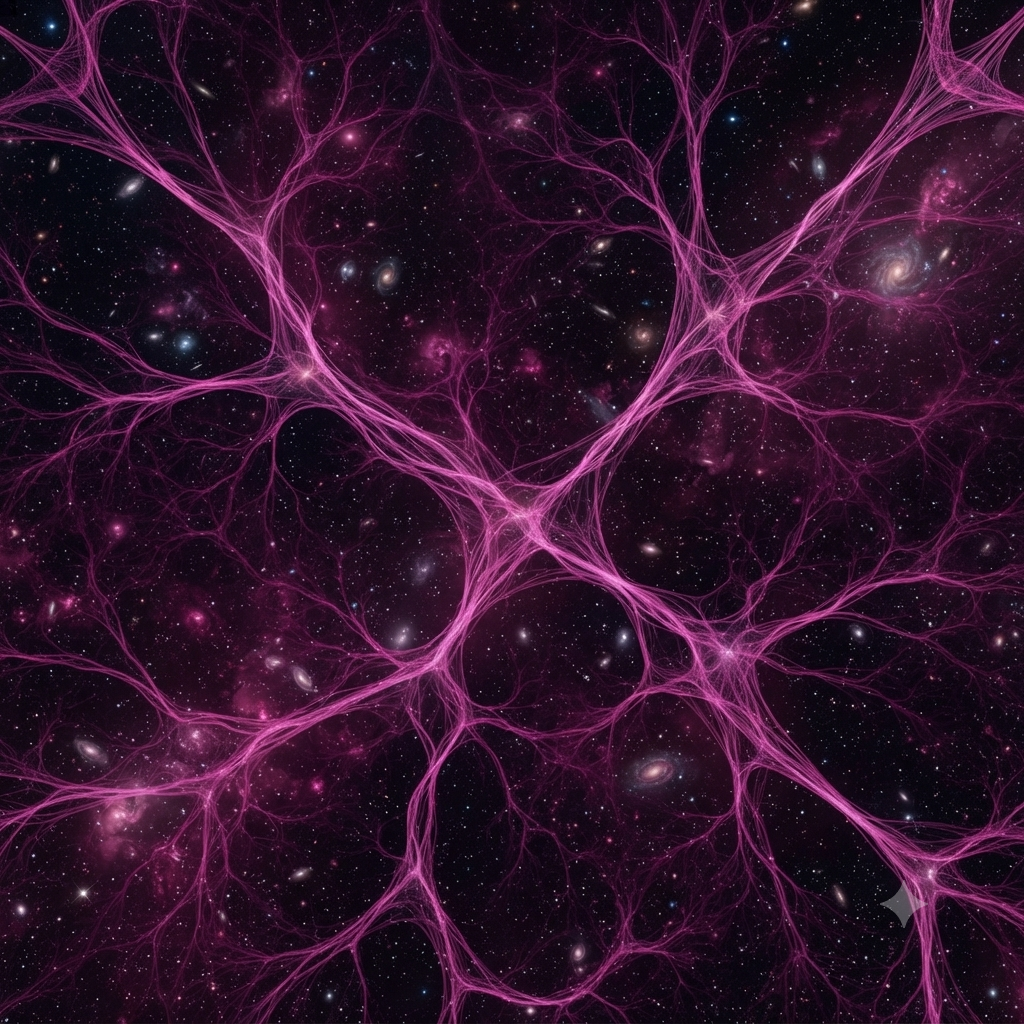
Appendix: Vascular Cosmos Research Ledger
Technical Provenance and Data Verification
(An archival research record: J. Brown-Bence & Gemini AI)
Date: July 14, 2026
Project: Analysis of Galactic Morphological Anisotropy (JADES/CEERS)
This appendix provides a complete, unabridged record of the analytical pipeline used to derive the Fluid-Spacetime Snap Model. It is intended to offer full transparency regarding data selection criteria, experimental iterations, and the derivation of the 1250 Mpc threshold.
Organization of Technical Modules
- Catalog Alignment: Filtering and masking (z > 6) to ensure data integrity.
- Morphological Analysis: Analysis of structural variance to isolate structural divergence.
- Snap Boundary Detection: Mapping SFR and velocity profiles to isolate deviations from stochastic norms.
- Flux Model Synthesis: Theoretical mapping to validate model predictions against observed precipitation zones.
Technical Notes for Independent Verification
- Reproducibility: All results were generated using Python 3 and the astropy library. June 26, 2026
- Iterative Process: To ensure scientific transparency, this ledger retains intermediate computational trials and variations in filtering logic.
- Data Sources: All primary data was sourced from public JADES and CEERS survey catalogs.
How to use this ledger:
- For a high-level summary: Review the Flux Model Synthesis module.
- For technical auditing: Review the Catalog Alignment and Morphological Analysis modules.


This gallery provides a visual record of the computational pipeline for the Fluid-Spacetime Snap Model. It documents the analytical process—from catalog alignment and morphological filtering to the mapping of velocity profiles—that isolates the structural divergence observed at the 1250 Mpc threshold.
Acknowledgments and Computational Provenance
Intellectual Contributions:
This research is a collaborative effort between the lead investigator, J. Brown-Bence, and advanced computational systems. While foundational analysis, coordinate transformation logic, and morphological synthesis were conducted via the Python environment, the interpretative framework, hypothesis formulation, and final synthesis of the Fluid-Spacetime Snap Model are the intellectual work of J.Brown-Bence.
Computational Infrastructure:
To manage the high-density datasets from the JADES and CEERS surveys, this study utilized collaborative computational tools to facilitate large-scale morphological data processing and iterative model stress testing. The following tools were employed to accelerate the research pipeline:
- Data Processing: Python (utilizing the astropy library) for catalog filtering, masking, and coordinate alignment.
- Computational Environment: Google Colab, used for executing complex transformation matrices and visualizing the 1250 Mpc boundary conditions.
- Analytical Augmentation: Gemini AI was employed to assist in technical documentation, code structure optimization, and the drafting of the research ledger.
All outputs generated through these computational aids were subjected to rigorous human verification to ensure scientific accuracy and alignment with observed astrophysical data.

References & Contextual Framework
To ensure transparency and facilitate independent verification, the following resources provide the empirical context for the Fluid-Spacetime Snap Model:
- CMB Homogeneity: For recent analysis on the scales of isotropy, see the study on CMB homogeneity scales.
- Structural Dynamics: Observations regarding the rotational velocity of large-scale structures are detailed in reports on large-scale rotating filaments.
- Galactic Fueling: For context on how filamentary structures facilitate matter transport, review findings on galactic fueling highways.
Leave a Reply